

Important: Since this is health/YMYL content, I strongly recommend that before publication we eventually add a real qualified reviewer. Google specifically recommends clear authorship and evidence of expertise for content where trust and health are significant considerations.
For many men, the 50s are when prostate health becomes something worth paying closer attention to.
The prostate naturally changes as men age, and benign prostatic hyperplasia (BPH) becomes increasingly common. BPH is a non-cancerous enlargement of the prostate and is the most common prostate problem in men over 50.
Some men may experience urinary changes such as a weaker stream, difficulty starting urination, increased frequency, urgency or waking during the night to urinate.
But here’s the important part:
Urinary symptoms don’t automatically mean you have BPH.
They can have several different causes, which is why persistent or concerning symptoms should be discussed with a healthcare professional.

The prostate is a small gland located below the bladder and around the urethra, the tube that carries urine out of the body.
The prostate has two main periods of growth. The first occurs during puberty. The second begins around age 25 and continues throughout life.
BPH often develops during this later period of prostate growth.
According to the National Institute of Diabetes and Digestive and Kidney Diseases (NIDDK), BPH affects approximately 5% to 6% of men ages 40–64 and 29% to 33% of men age 65 and older. It is the most common prostate problem among men over 50.
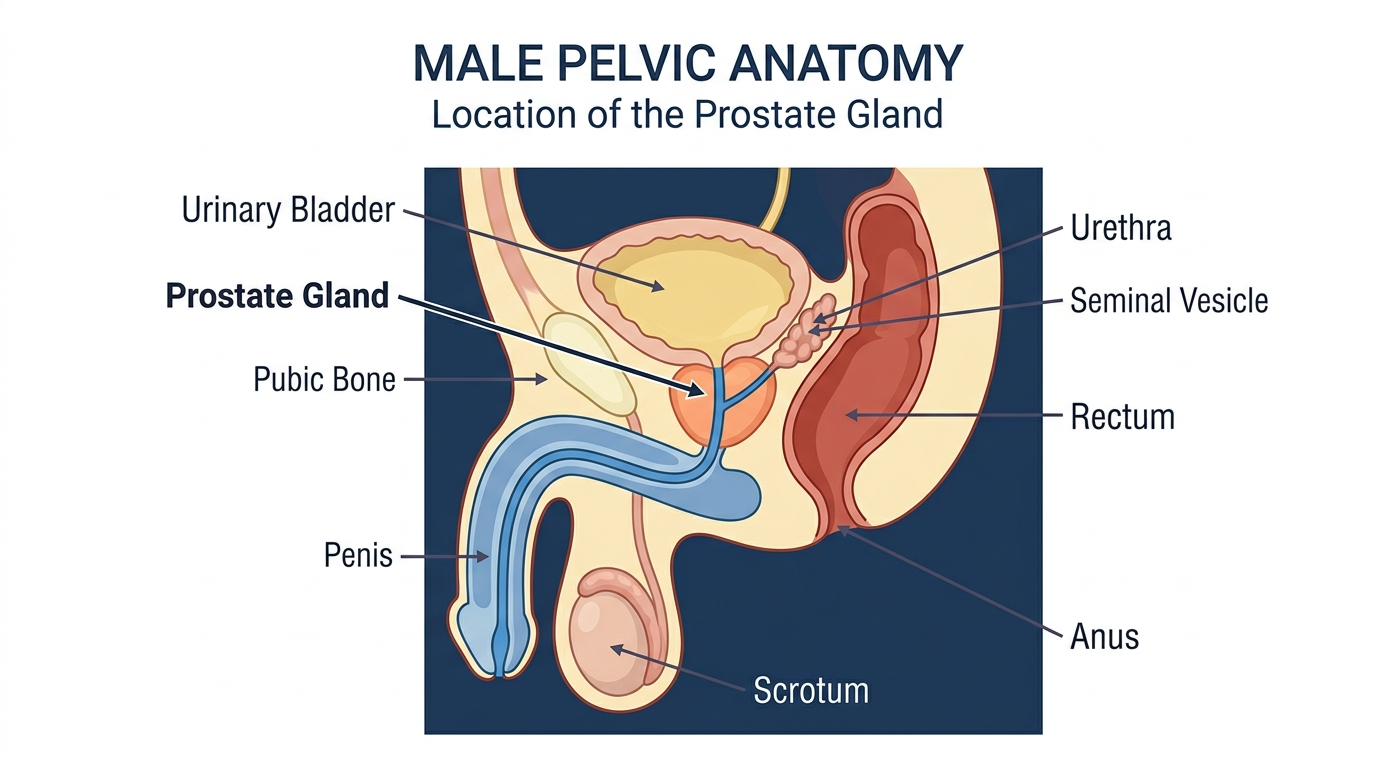
BPH stands for benign prostatic hyperplasia.
The word “benign” is important.
BPH is not prostate cancer.
It refers to enlargement of the prostate that can sometimes interfere with normal urine flow.
As the prostate enlarges, it can put pressure on the urethra. The bladder may then have to work harder to push urine through the narrowed passage. In some cases, this can contribute to difficulty emptying the bladder.
BPH can produce a variety of lower urinary tract symptoms.
These may include:
But here’s something every man should understand:
Symptoms alone don’t tell you exactly what’s causing them.
For example, urinary symptoms can also be associated with bladder problems, urinary tract infections, prostatitis or other conditions, including prostate cancer.
One of the most frustrating urinary changes for some men is having to get up repeatedly during the night.
The medical term for excessive nighttime urination is nocturia.
BPH can be associated with nocturia, but nighttime urination isn’t automatically caused by an enlarged prostate. Other factors and conditions can contribute as well.
And the consequence is obvious:
When your sleep is repeatedly interrupted, your next day can feel very different.
You may feel:
If nighttime urination becomes persistent or disruptive, don’t simply assume it’s “just getting older.”
Here’s where we want to take a different approach from the typical supplement advertisement.
Your prostate doesn’t exist in isolation.
It’s part of a much bigger picture:
your overall health.
That means prostate wellness should be considered alongside:
There isn’t a single food, exercise or supplement that guarantees perfect prostate health.
The goal is to build habits that support your overall well-being as you age.

Physical activity is one of the simplest ways to invest in your long-term health.
You don’t need an extreme workout program:
Even recreational activities such as golf can help you stay active.
The NIDDK identifies physical inactivity as one factor associated with greater likelihood of developing BPH and notes that being physically active may help reduce risk, although researchers have not found a way to completely prevent BPH.

A healthy diet is important for overall wellness.
Focus on a balanced pattern that includes nutrient-dense foods and appropriate portions.
But we should be careful about making specific prostate-prevention claims.
According to the NIDDK, researchers have not found that eating, diet or nutrition causes or prevents BPH. However, certain dietary changes may help with some symptoms.
For example, reducing alcohol and caffeine intake may help some men who experience urinary symptoms, and limiting fluids before bedtime may reduce nighttime trips to the bathroom.
That’s a much more useful message than telling men that one particular food is a “prostate cure.”
Sleep isn’t just about feeling rested.
It’s part of your overall quality of life.
If you’re waking several times each night to urinate, it’s worth paying attention.
Instead of automatically blaming age, consider discussing persistent nighttime urination with a healthcare professional.
You don’t have to train like an athlete to age well.
Find activities that you genuinely enjoy.
Maybe that’s:
Saturday morning hiking.
A round of golf.
A walk after dinner.
Strength training three times a week.
Fishing with friends.
The best routine is usually the one you can maintain.
This might be the most important habit of all.
Men often have a tendency to ignore health changes.
“It’s probably nothing.”
“It’s just part of getting older.”
“I’ll deal with it later.”
That’s not always the best approach.
If urinary symptoms persist or interfere with your daily life, talk with a healthcare professional.
And seek prompt medical attention if you:
Being proactive isn’t being paranoid.
It’s taking responsibility for your health.
This is where consumers need to become more discerning.
Walk into the men’s wellness market and you’ll find dozens of supplements marketed around prostate health, urinary wellness and healthy aging.
Many contain combinations of botanical extracts, vitamins and other nutritional ingredients.
But there’s an important distinction:
An ingredient being popular doesn’t automatically mean that every product containing it has been proven to produce a specific result.
That’s why we should look at the actual formula.
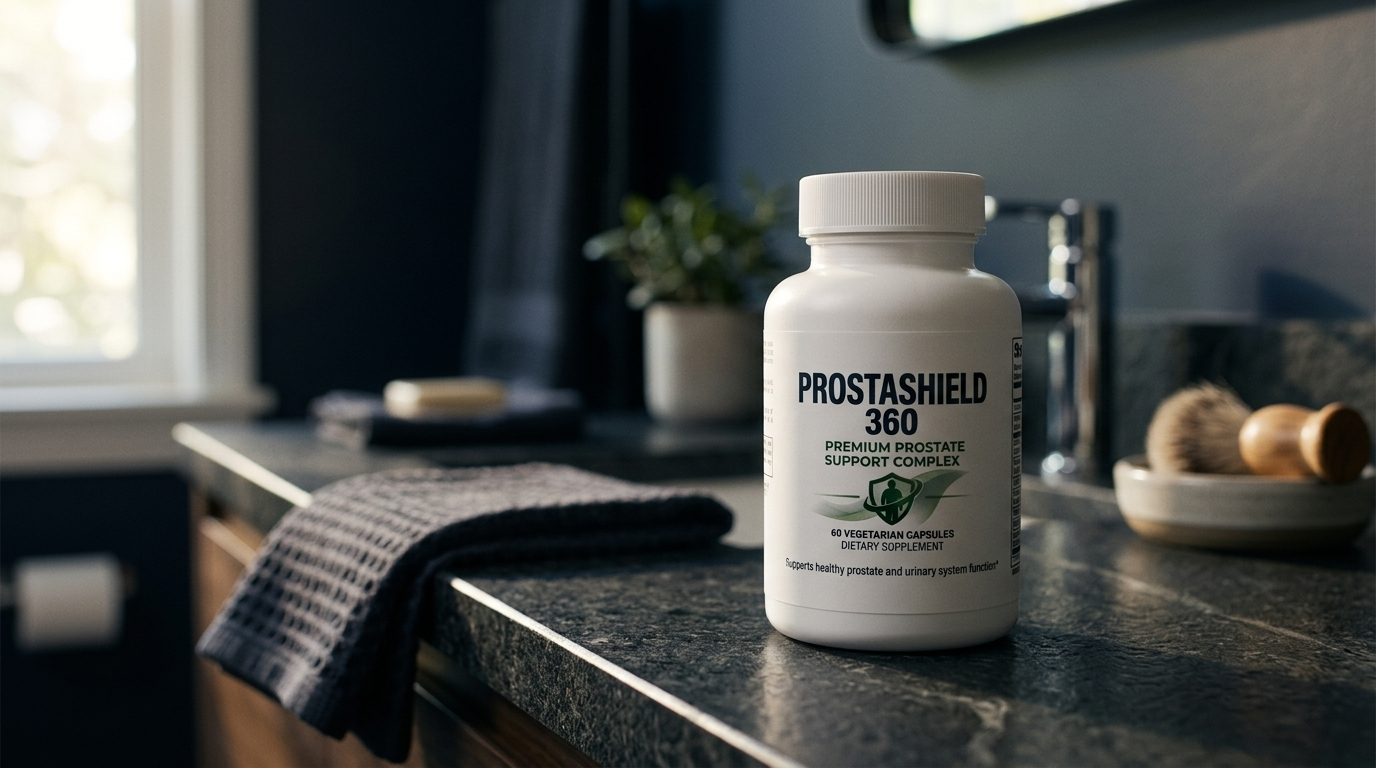
ProstaShield360 is a dietary supplement from NutriShield 360 formulated for men’s wellness.
The current product page describes it as a Non-GMO Blend for Urinary Function and Men’s Longevity and positions the formula around prostate and normal urinary wellness.
The current serving size is: 2 capsules per day
with: 30 servings per container / 60 capsules.
The product page instructs adults to take two capsules daily with 6–8 oz of water, or as directed by a healthcare professional.
The current Supplement Facts section on the official product page lists these active ingredients:
Vitamin E
as dl-alpha tocopheryl acetate
Vitamin B6
as pyridoxine hydrochloride
Saw Palmetto Extract
Serenoa repens fruit
Pygeum africanum Extract
bark, standardized to 3% phytosterols
Grape Seed Extract
Vitis vinifera seed
Pumpkin Seed Extract
Cucurbita moschata seed
Nettle Extract
leaf extract profile
Boron
as boron amino acid chelate
Lycopene 5%
from tomato (Lycopersicum esculentum)
The product page also lists hypromellose, rice flour, magnesium stearate and silicon dioxide as other ingredients.
The current online Supplement Facts section does not display the amount per serving for each individual active ingredient in the text available on the product page.
Therefore, we will not publish invented milligram amounts anywhere in the blog.
That is an important editorial rule.
This is where our blog should provide value beyond simply repeating the product page.
Saw palmetto is one of the most recognizable botanical ingredients in men’s prostate supplements.
But the scientific evidence is more nuanced than many advertisements suggest.
The NCCIH reports that a 2023 review of 27 studies found saw palmetto used alone provided little or no benefit for BPH symptoms. The evidence for combinations containing saw palmetto was not definitive.
So our editorial position is straightforward:
Saw palmetto is an ingredient with a long history of use and research, but we should not describe it as a proven treatment for BPH.
Pygeum is another botanical ingredient used in men’s prostate supplements.
It has been studied in connection with urinary symptoms associated with prostate enlargement.
However, the existence of research around an ingredient does not mean that every formulation containing it has demonstrated the same outcome.
That’s why our content should distinguish between:
ingredient research and product-specific evidence.
Lycopene is a carotenoid found naturally in tomatoes and is included in the current ProstaShield360 formula.
It is often discussed in the context of antioxidant nutrition and men’s health.
But again, we should avoid turning “contains lycopene” into “prevents prostate disease.”
The purpose of our blog is to help readers understand the difference.
The current ProstaShield360 sales page uses stronger marketing language, including references to a “21-Day Transformation” and claims about reducing nighttime bathroom trips.
For our editorial content, however, I recommend we do not present those statements as established clinical outcomes.
Why?
Because we currently have not verified product-specific clinical evidence demonstrating those results for the exact current ProstaShield360 formula and serving size.
And this distinction matters.
The FDA says dietary-supplement structure/function and general-well-being claims must be truthful, not misleading and substantiated. The agency also distinguishes these from disease claims, which cannot simply be made for a dietary supplement.
So our content strategy is:
educate first → explain the formula → discuss evidence → invite the reader to learn more.
That’s stronger long-term brand building than making an exaggerated promise.
ProstaShield360 is designed to be taken daily as part of a broader men’s wellness routine.
The current product instructions recommend:
Two capsules daily with 6–8 oz of water, or as directed by a healthcare professional.
But a supplement should not replace:
Think of supplementation as one component of a larger wellness strategy.
The current product page advises pregnant or nursing individuals, people under 18 and individuals with known medical conditions to consult a physician before using the product. It also advises not exceeding the recommended dose and keeping the product out of children’s reach.
For men experiencing persistent urinary symptoms, medical evaluation is particularly important.
A supplement shouldn’t be used as a substitute for figuring out what’s actually causing the symptoms.
Don’t wait if something feels wrong.
According to NIDDK, men should discuss urinary symptoms with a healthcare professional because symptoms may have different causes.
Seek prompt medical attention if you:
Cannot urinate at all.
Have blood in your urine.
Experience painful, frequent or urgent urination with fever or chills.
Have significant lower abdominal or urinary tract pain.
These symptoms deserve medical attention rather than self-treatment.
Your 50s don’t have to be about worrying more about your health.
They can be about becoming more intentional about it.
Move your body.
Eat well.
Protect your sleep.
Stay socially active.
Pay attention to changes.
Know your family history.
Keep up with appropriate healthcare.
And make informed decisions about the supplements you choose.
Healthy aging isn’t about trying to become 30 again.
It’s about giving your 50s, 60s and beyond the best foundation you can.
BPH is the most common prostate problem in men over 50.
Don’t automatically assume that every urinary change is BPH.
Being physically active may help reduce the risk of BPH.
Current evidence does not establish that diet causes or prevents BPH.
Look at the actual ingredients, evidence, serving size and claims.
Its current formula includes saw palmetto, pygeum, grape seed, pumpkin seed, nettle, lycopene, vitamins E and B6, and boron.
Don’t diagnose yourself based on a supplement advertisement or an online article.
Prostate growth becomes more common with age, and BPH is the most common prostate problem in men over 50. However, not every enlarged prostate causes symptoms.
No.
Nighttime urination can occur with BPH, but it can have other causes as well. Persistent symptoms should be discussed with a healthcare professional.
No.
BPH is a non-cancerous enlargement of the prostate. However, urinary symptoms can have multiple causes, so they should not be used for self-diagnosis.
Physical inactivity is associated with greater likelihood of BPH, and the NIDDK notes that being physically active may help reduce risk.
The current formula lists vitamin E, vitamin B6, saw palmetto, pygeum africanum, grape seed extract, pumpkin seed extract, nettle extract, boron and lycopene.
The current product page recommends adults take two capsules daily with 6–8 oz of water, or as directed by a healthcare professional.
We should not make that claim.
ProstaShield360 is a dietary supplement positioned for men’s wellness and normal urinary wellness. It should not be presented as a treatment for BPH or another medical condition.
Understand benign prostatic hyperplasia, common symptoms and why urinary changes deserve attention.
→ Read: What Is BPH?
Explore nighttime urination, possible causes and when it may be worth talking with a healthcare professional.
→ Read: Why Men Wake Up to Urinate at Night
What does the research actually say about one of the most common ingredients in men’s prostate supplements?
→ Read: Saw Palmetto and Prostate Health
Learn about this botanical ingredient and why it appears in many men’s wellness formulas.
→ Read: What Is Pygeum?
If you’re looking for a daily men’s wellness supplement, you can review the current ProstaShield360 formula, Supplement Facts, suggested use and product information directly on the official product page.
View the official ProstaShield360 product page
This article is for informational and educational purposes only. It is not intended to provide medical advice, diagnose a condition, or replace consultation with a qualified healthcare professional.
Dietary supplements are not intended to diagnose, treat, cure, or prevent any disease.
If you have persistent, severe or concerning urinary symptoms, consult a qualified healthcare professional.